

INDONESIA – WEST PAPUA
6–24 August 2027
The birds-of-paradise have got to rank among the holy grails of birding. Alongside our popular tour to Papua New Guinea, Birdfinders is delighted to offer this exciting tour to the western side of the island of New Guinea in search of species not found, or trickier to see, in the east. We will look for the extraordinary Western Parotia, Magnificent Bird-of-paradise and Vogelkop Bowerbird in the Arfak area, while time spent in the forests of the Klasow Valley could yield Twelve-wired, Lesser and King Birds-of-paradise and Magnificent Riflebird. The tour ends with a visit to Waigeo island for hide views of the exquisite Wilson’s Bird-of-paradise and the opportunity to see the near-threatened Red Bird-of-paradise. As birding trips of a lifetime go, it would be tricky to find a more memorable one than this.
Day 1 Overnight flight from London to Jakarta and a further overnight direct flight to Manokwari in West Papua, arriving early on Day 3. You can leave a day earlier and overnight in Jakarta on Day 2, with extra cost just for the hotel.
Days 3–7 On arrival in Manokwari, we will drive to the mountainous region of Arfak, birding en route. We will spend the first afternoon looking for species such as New Guinea and Capped White-eyes, Frilled and Golden Monarchs, Northern Variable Pitohui and maybe Torrent Flyrobin. Other species on our radar include Wallace’s Fairy-wren, Western Ornate Fruit-dove and Papuan Black, Red, Mountain and Red-collared Myzomelas. Days 4 to 7 will then be spent birding this remote mountain region in more depth, although we will be concentrating on the easier trails in the area and will not be birding the tops. Roadside birding should be very productive for us and will give us an opportunity to find some of Papua’s most desirable, yet little-known species. In addition, we will pay a visit to some hides for a privileged view of the extraordinary dancing display of the Western Parotia (the bird-of-paradise that fans out its midsection to resemble a ballerina’s tutu). As if that wasn’t enough excitement, we may also catch sight of Magnificent Bird-of-paradise and Long-tailed Paradigalla from the hide, and the elusive Black-billed Sicklebill normally comes in to the pandanus fruit provided by locals. Other fantastic targets in this area include the fascinating Vogelkop Bowerbird, which not only builds an impressive bower but is also a skilled mimic, Feline and Mountain Owlet-nightjars, which can be seen at known roost sites during the day, Plum-faced Lorikeet, Papuan Eagle, Trumpet Manucode, Rufous-naped Bellbird, Papuan Sittella, Modest and Brehm’s Tiger-parrots, White-bibbed Fruit-dove, Papuan Hornbill, Papuan Logrunner, Pesquet’s Parrot, Vogelkop, Sclater’s and Regent Whistlers, Green-naped Catbird, Cinnamon-browed and Rufous-sided Honeyeaters, White-striped Forest-rail, Goldenface, Hooded Pitohui, Papuan Mountain-pigeon, Shining Imperial-pigeon, Vogelkop Scrubwren, Green-backed, Smoky, Black-throated, Blue-grey and Garnet Robins, Papuan Parrotfinch and Black-breasted Boatbill. Roadside stops at higher altitudes give us the possibility of species such as Orange-crowned Fairy-wren, Arfak and Vogelkop Honeyeaters, Black Sicklebill and maybe even the rare Arfak Astrapia. Five nights in very basic accommodation in the Mount Arfak area at an altitude of 1600 metres above sea level.
Day 8 It will be difficult to tear ourselves away from the extraordinary species of this area, so we will do so gently. We will spend this morning continuing our roadside birding in the hope of adding to our ever-growing lists before we depart, after lunch, for an overnight stay in Manokwari.
Days 9–11 On the morning of Day 9, we will fly to Sorong and then drive on to the Klasow Valley. The valley is rich in birdlife and we have the opportunity here to see four or five birds-of-paradise including Twelve-wired, Lesser and King Birds-of-Paradise and Magnificent Riflebird. We might also be lucky enough to see the tame Northern Cassowaries, which sometimes come in to the village from the forest looking for fruit provided by the locals. Our focus in this forest area will be on our main targets: Red-breasted Paradise-kingfisher, the exquisite Blue-black Kingfisher, Large Fig-parrot and Black Lory, which mostly fly overhead and feed in the canopy. Other birds found here include Thick-billed Ground-pigeon, New Guinea Bronzewing, Wompoo, Dwarf, Beautiful, Orange-bellied and Claret-breasted Fruit-doves, Cinnamon Ground-dove, White-crowned Cuckoo, Black-sided Robin, Moluccan King-parrot, Papuan Babbler, Ivory-billed Coucal, Eastern Koel, Rusty Pitohui, Plain and Scrub Honeyeaters, Olive Flyrobin, Papuan and Eastern Hooded Pittas and Red-billed Brush-turkey (usually heard only). At night, we may encounter Rufous Owl, Papuan Nightjar, Papuan Hawk-owl and Papuan and Marbled Frogmouths. Three nights at very basic accommodation or glamping in a village inside the forest.
Day 12 After a final morning spent searching for any missing species in the Klasow Valley, we will return to Sorong. This afternoon will be spent birding in the Sorong area, looking for such species as Collared Imperial-pigeon, Black Thicket-fantail, Long-billed Honeyeater, Red-cheeked Parrot, Black Butcherbird, Moustached Treeswift, Golden Cuckooshrike, Pink-spotted Fruit-dove, Brown Oriole, Long-tailed Honey-buzzard and Little Kingfisher. Night in Sorong.
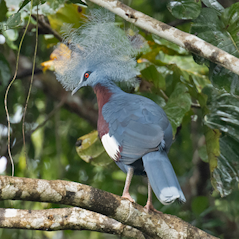
Days 13–15 On the morning of Day 13, we will take a fast ferry to Waigeo. This island, the biggest in the Raja Ampat group, holds several species absent from the mainland, and these will form our focus here. The kaleidoscopic Wilson’s Bird-of-paradise is our primary target, and although it will mean early starts, we will have good opportunities to watch and photograph displaying males from hides. This bird is a frequent visitor to the display ground, and from the hides we will be able to observe the male in full action – calling and displaying vigorously to any females entering his arena. Another target is Red Bird-of-paradise, and we should have good opportunities to photograph this species. Another endemic found here is the Waigeo Pitohui, while regional specialities could include the shy but stunning Western Crowned-pigeon, Yellow-billed Kingfisher, Sulphur-crested and Palm Cockatoos, Great-billed Parrot, Moluccan Eclectus, Coconut Lorikeet (split from Rainbow Lorikeet), Purple-tailed Imperial-pigeon, Pygmy Eagle and Beach Kingfisher. Among the other myriad species we will be hoping to encounter on the island are: White-breasted Woodswallow, Moluccan and Singing Starlings, Hook-billed Kingfisher, Dusky Scrubfowl, Black Sunbird, New Guinea Dwarf-kingfisher, Gurney’s Eagle, Oriental Dollarbird, Tawny-breasted and Green-backed Honeyeaters, Glossy-mantled Manucode, Brown-headed Crow, Spot-winged Monarch, Stephan’s Dove and Rufous-bellied Kookaburra. Three nights on Waigeo.
Day 16 We will return by ferry to Sorong this morning. From the ferry we will be looking out for species such as Lesser Frigatebird, Black-naped and Greater Crested Terns. The remainder of the day will be spent birding in the Sorong area. Overnight in Sorong.
Day 17 This morning we will say our goodbyes to our hosts and transfer to the airport for our flight back to London, arriving on Day 18.
General Information Maximum temperatures in West Papua are around 32°C throughout the year, decreasing with altitude to a minimum of 14°C at night in the highlands. The (relatively) dry season starts in late April running through to November although rain can be expected at any time of year. The pace of the tour is moderate, with a medium degree of fitness required for walks of up to 5–6 miles. Most days we will take a break at midday to relax. The highest altitude to which we will ascend is under 3,000m. There are a number of health requirements including malaria and you must consult with your GP in this respect. Accommodation throughout is a combination of comfortable hotels and wildlife/birding lodges with private facilities and some more basic lodges with shared outside facilities. Visas are required and can obtained on arrival at a cost of around £25.
Group SizeMinimum number for tour to go ahead: 6; maximum group size 8 with 1 leader.
 Currency converter